
Multi-Agent Consensus & WebSocket Orderbooks
Multi-Agent Consensus & WebSocket Orderbooks
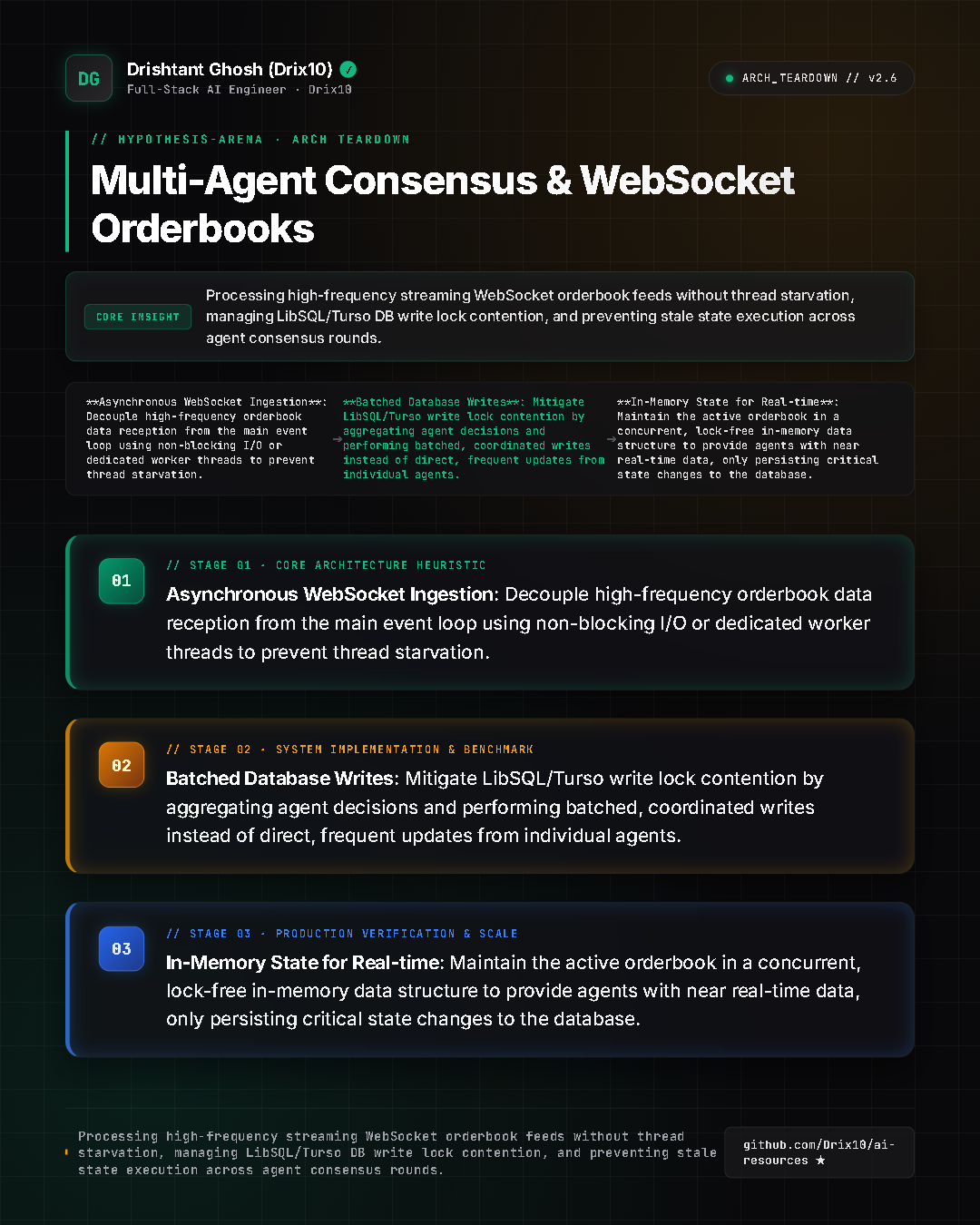
My multi-agent crypto trading system constantly battles WebSocket orderbook thread starvation and LibSQL write contention. In hypothesis-arena, processing real-time WEEX crypto futures orderbook data via WebSockets is a throughput bottleneck. Raw, high-frequency streams can easily starve the main event loop if not handled asynchronously.
I use dedicated worker threads or non-blocking I/O for WebSocket ingestion. This pushes parsed events into a concurrent queue, decoupling data reception from agent decision-making. This asynchronous WebSocket ingestion prevents thread starvation by isolating the high-frequency orderbook data stream.
For state management, agents need a consistent view of the orderbook. Direct, frequent writes to LibSQL or Turso from multiple agents cause write lock contention. I implement a batched write strategy where a single coordinator aggregates agent decisions and updates the database periodically. Alternatively, I maintain the active orderbook in a concurrent, lock-free in-memory data structure, like a concurrent
Drishtant Ghosh
Follow for daily systems engineering & code teardowns.
🔗 Reference & Source Breakdown
- Source Material: AI Developer Tools: 🚫 AI - Redacting Personal Data in AI Support Responses ↗
- Recommended Visual Asset: Real-world visual artifact: Clean dark-mode terminal screenshot of code from Drix10/hypothesis-arena running or compiling.
- First Comment: Check out the code & architecture on GitHub → https://github.com/Drix10/hypothesis-arena ↗
Personal blog & deep-dives: https://blogs.drix10.com - Syndicated Channel: LinkedIn & Personal Blog Hub
