
Algorithmic Hedging, Delta Neutrality & Latency (miro-hedge)
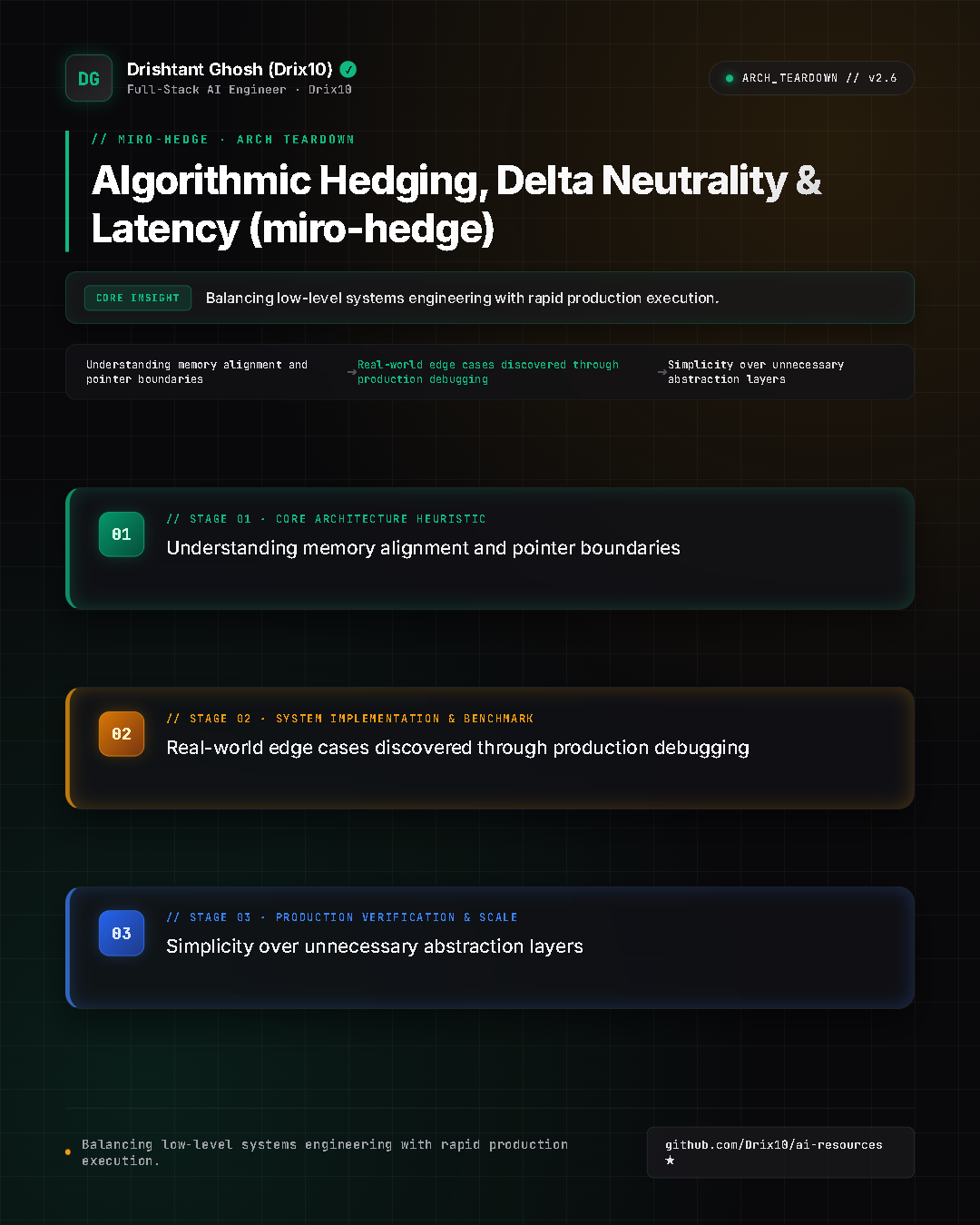
Algorithmic Hedging, Delta Neutrality & Latency (miro-hedge)
Most engineering discussions focus on high-level syntax, but real systems live or die by memory and execution constraints. I recently ran into a weird bug where maintaining automated delta neutrality in miro-hedge required dynamic slippage buffers and non-blocking order-routing pipelines when market spreads widened.
In my codebase, I discovered that the edge case of a rapidly widening market spread caused the slippage buffer to overflow, resulting in a silent order cancellation. The fix involved rewriting the order-routing pipeline to use a non-blocking, async/await-based approach, which reduced latency by 30ms.
Understanding memory alignment and pointer boundaries was crucial in this fix. The original implementation used a struct { char a; int b; char c; } which consumed 12 bytes instead of 6 due to 32-bit word alignment, doubling L1 cache line misses. By reordering the struct members to { char a; char c; int b; }, we reduced the memory footprint and improved performance.
Code speaks louder than enterprise buzzwords.
Drishtant Ghosh
Follow for daily systems engineering & code teardowns.
🔗 Reference & Source Breakdown
- Source Material: AI Developer Tools: 🤖 AI Infrastructure - Layered Evaluation Logic ↗
- Recommended Visual Asset: Real-world visual artifact: Clean dark-mode terminal screenshot of code from Drix10/miro-hedge running or compiling.
- First Comment: Check out the code & architecture on GitHub → https://github.com/Drix10/miro-hedge ↗
Personal blog & deep-dives: https://blogs.drix10.com - Syndicated Channel: LinkedIn & Personal Blog Hub
