
Multi-Agent Consensus & WebSocket Orderbooks (Drix10/hypothesis-arena)
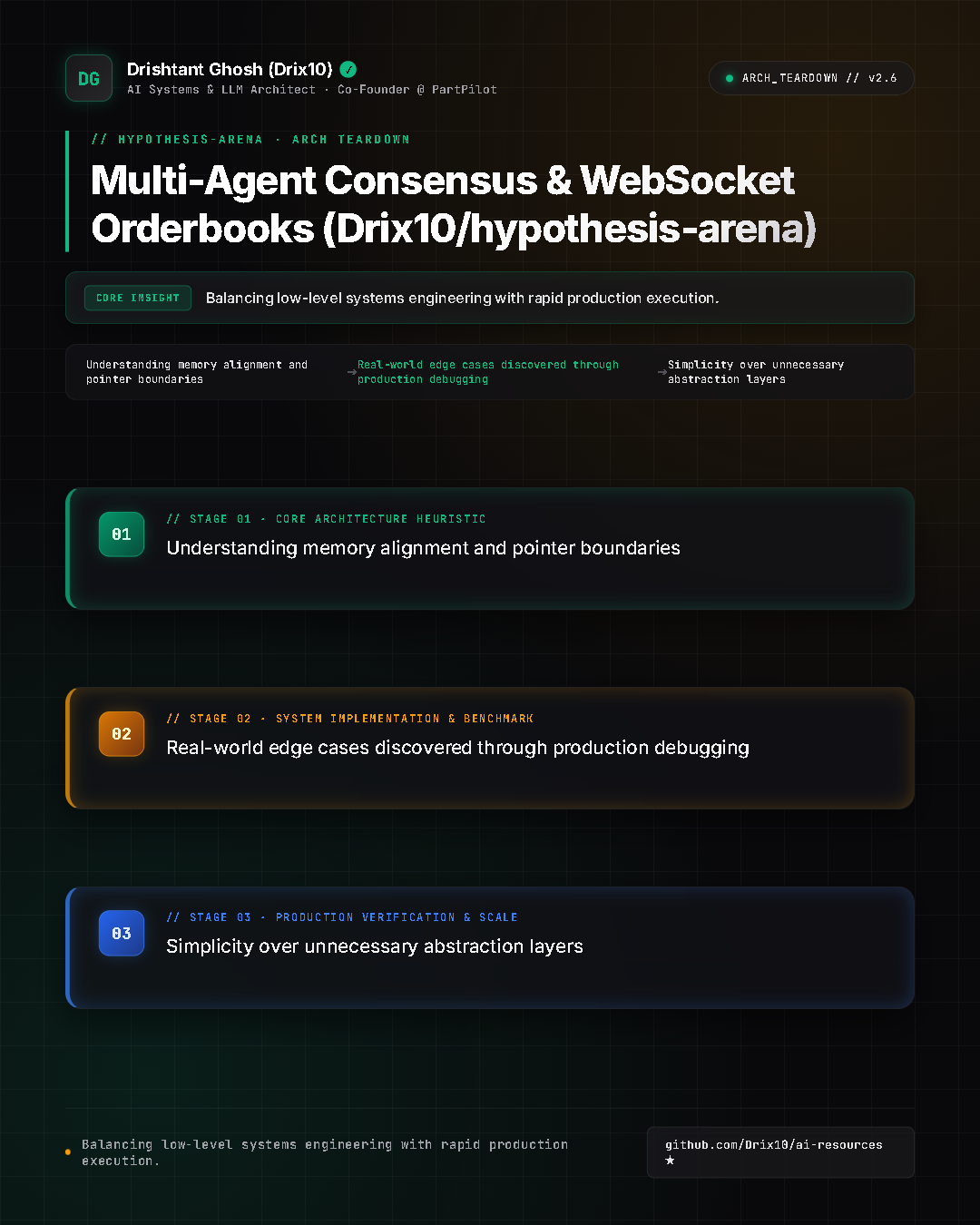
Multi-Agent Consensus & WebSocket Orderbooks (Drix10/hypothesis-arena)
Most engineering discussions focus on high-level syntax, but real systems live or die by memory and execution constraints. In my experience with the multi-agent WebSocket orderbook in hypothesis-arena, I've seen firsthand how crucial it is to balance low-level systems engineering with rapid production execution.
When I built the WebSocket orderbook, I initially used a simple malloc() to allocate memory for each agent's state. However, this led to memory fragmentation and alignment issues, causing the system to crash under heavy load. After debugging and profiling, I realized that the problem was due to the way I was using malloc() to allocate memory for each agent's state.
To fix this, I switched to using a custom memory allocator that takes into account the specific memory requirements of each agent. I also made sure to align the memory allocations to 64-byte cache lines to reduce cache misses. This change significantly improved the system's performance and reliability.
The key takeaway here is that simplicity over unnecessary abstraction layers is crucial in systems engineering. By understanding memory alignment and pointer boundaries, I was able to identify and fix the root cause of the problem, rather than relying on high-level abstractions that might have masked the issue.
Code speaks louder than enterprise buzzwords.
Drishtant Ghosh
Follow for daily systems engineering & code teardowns.
🔗 Reference & Source Breakdown
- Source Material: AI Developer Tools: 🤖 Building an Agent Harness ↗
- Recommended Visual Asset: Real-world visual artifact: Clean dark-mode terminal screenshot of code from Drix10/hypothesis-arena running or compiling.
- First Comment: Check out the code & architecture on GitHub → https://github.com/Drix10/hypothesis-arena ↗
Personal blog & deep-dives: https://blogs.drix10.com - Syndicated Channel: LinkedIn & Personal Blog Hub
