
🤖 Catastrophe Theory - Historical Impact and Enduring Concepts
This article outlines the historical trajectory of catastrophe theory, initially popularized by Christopher Zeeman in the 1960s. It explains how, despite early widespread application and subsequent decline in hype, the fundamental concepts underpinning the theory have retained their relevance.
Key Points:
• Catastrophe theory gained significant popularity in the 1960s.
• It was applied to diverse phenomena like bridge collapses and regime changes.
• Initial widespread hype surrounding the theory eventually subsided.
• The fundamental mathematical concepts of catastrophe theory continue to be relevant.
• Zeeman's work helped popularize these complex mathematical ideas.
🔗 Resources:
• The Math of Cliffs ↗ - How catastrophe theory helps us understand sudden change

Image
💡 Geopolitics of Technology - US Tech Companies and China's Techno-Authoritarianism
This article examines the dual connections of major American tech companies to both US national security and the Chinese Communist Party. It highlights concerns raised about their role in supporting China's techno-authoritarian agenda.
Key Points:
• US tech companies maintain significant ties with national security agencies.
• These same companies also have deep engagements with the CCP.
• A new report details complicity in China's techno-authoritarian agenda.
• The report provides an accounting of American firms' involvement.
🔗 Resources:
• Foundation for American Innovation ↗ - Organization behind report on tech ties

Image
🤖 AI Reasoning - Personalized Reasoning in Language Models
This article discusses the challenge of effective AI problem-solving, emphasizing that the method of reasoning must adapt to the audience. It introduces personalized reasoning as a solution, where models proactively consider user preferences.
Key Points:
• Correct problem solving requires considering the reasoning approach.
• User preferences are crucial for effective communication of reasoning.
• Personalized reasoning adapts model thinking based on user input.
• Current frontier models exhibit limitations in personalized reasoning.
• Adapting how models think enhances their utility and user experience.
🔗 Resources:

Image
🤖 Machine Learning Objectives - Beyond Negative Log-Likelihood for Classification
This article investigates the widespread use of Negative Log-Likelihood (NLL) as an objective function in classification and Supervised Fine-Tuning (SFT). It explores specific conditions under which alternative objective functions may offer superior performance compared to NLL.
Key Points:
• Negative Log-Likelihood is a standard objective for classification and SFT.
• Its universal optimality across all scenarios is being questioned.
• Alternative objectives can outperform NLL in certain contexts.
• Performance hinges on factors like objective's prior-leaningness.
• Model characteristics also influence the choice of optimal objective.
🔗 Resources:

Image

Image
🤖 Reinforcement Learning Theory - Information Theory of Policy Gradients in Bayesian RL
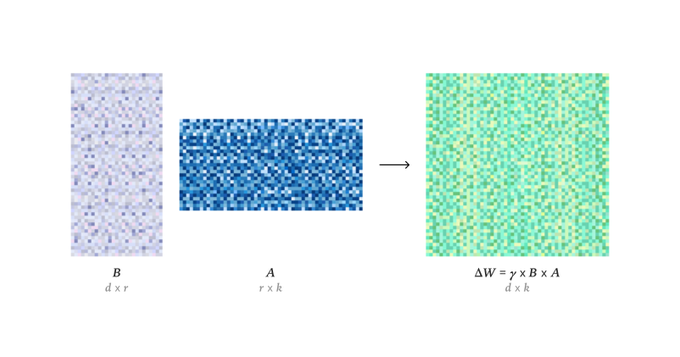
This article formalizes an insight regarding policy gradient learning, demonstrating that it acquires approximately one bit of information per episode within a Bayesian Reinforcement Learning framework. It further proves this to be an information-theoretic ceiling and extends the analysis to actor-critic methods.
Key Points:
• Policy gradient learning has an information-theoretic limit.
• Approximately one bit of information is learned per episode in Bayesian RL.
• This finding is inspired by the "LoRA Without Regret" concept.
• The analysis extends to cover actor-critic reinforcement learning methods.
• This provides a fundamental understanding of policy gradient efficiency.
🔗 Resources:
• LoRA Without Regret ↗ - Original post inspiring Bayesian RL formulation
Image
🤖 Large Language Models - Nudging LLMs for Enhanced Reasoning (NuRL)
This article introduces NuRL (Nudging the Boundaries of LLM Reasoning), an approach designed to overcome limitations of traditional methods like GRPO. It explains how NuRL aims to improve LLM reasoning by addressing hard-to-solve samples that current models often fail to learn from effectively.
Key Points:
• GRPO improves LLM reasoning but has limitations with difficult samples.
• Hard samples often remain unsolvable and provide no meaningful gradients.
• NuRL proposes a method to "nudge" LLMs beyond their comfort zone.
• This nudging aims to enable LLMs to tackle previously intractable problems.
• NuRL seeks to broaden the reasoning capabilities of large language models.
🔗 Resources:
• Related Discussion on NuRL ↗ - Further context on nudging LLMs for reasoning

Image
🤖 Machine Learning Optimizers - Muon's Enhanced Tail Optimization for Rare Classes
This article compares optimizer performance, explaining how Adam often surpasses SGD by excelling at optimizing losses for rare classes. It then introduces Muon, an optimizer that further improves upon Adam by demonstrating even better optimization of the heavy tail distributions.
Key Points:
• Adam generally outperforms SGD in optimizing rare class losses.
• Muon optimizer shows superior performance compared to Adam.
• Muon's advantage stems from enhanced heavy tail optimization.
• Tail optimization is crucial for addressing imbalanced data distributions.
• The focus is on effectively handling challenging, less frequent data points.
🔗 Resources:

Image
💡 Geopolitical Technology Concerns - Cybersecurity Risks of Low-Cost Robotics
This article discusses critical national security implications arising from the widespread availability of low-cost Chinese robots. It highlights concerns that these devices, potentially used for spying and cyber infiltration, pose a significant threat to national infrastructure due to competitive pricing challenges.
Key Points:
• Chinese robots are reportedly used for spying and cyber espionage.
• They offer a significantly lower price point ($6,000) than competitors.
• America struggles to compete with these low manufacturing costs.
• Purchasing these robots risks infrastructure infection and compromise.
• The economic disparity presents a major national security dilemma.
🚀 Planetary Observation - HiRISE Imaging of 3I/ATLAS Near Mars
This article details an upcoming astronomical event where the 3I/ATLAS object will approach Mars. It highlights the planned observation by the HiRISE camera, which aims to capture unprecedentedly clear images of the object with a specified spatial resolution.
Key Points:
• On October 3, 3I/ATLAS will be 29 million kilometers from Mars.
• The HiRISE camera on an orbiter will capture images.
• These images are expected to be the clearest ever of the object.
• The spatial resolution of the photos will be 30 kilometers per pixel.
• This event provides a unique opportunity for scientific data collection.
🔗 Resources:

Image
💡 Societal Dynamics - The Erosion of Truth in Divided Societies
This article explores the concept of a "post-truth" society, arguing that extreme division can lead to a state where objective truth and shared values diminish. It suggests that in such environments, personal agendas and power dynamics overshadow collective understanding and moral principles.
Key Points:
• Extreme societal division can lead to a "post-truth" environment.
• In such a state, objective truth and moral distinctions erode.
• Focus shifts to personal agendas and zero-sum outcomes.
• The primary concern becomes maintaining control and preventing unrest.
• Unified cultures typically foster respect for truth and mutual understanding.
⭐️ Support
If you liked reading this report, please star ⭐️ this repository and follow me on Github ↗, 𝕏 (previously known as Twitter) ↗ to help others discover these resources and regular updates.