
🤖 Security Priorities - Contextual Decision Making
This article discusses the inherent complexity in establishing security priorities, emphasizing that effective strategies are highly dependent on specific organizational contexts. It highlights the dynamic nature of cybersecurity and the need for adaptive approaches.
Key Points:
• Prioritization requires a thorough understanding of the specific environment.
• No one-size-fits-all approach applies to cybersecurity strategies.
• Effective security posture adapts to evolving threats and business needs.
• Regular reassessment ensures alignment with current risks.
🔗 Resources:
• Anton Chuvakin ↗ - Cybersecurity expert's profile
• Zack Korman ↗ - Industry professional's profile
• Techspence ↗ - Technology professional's profile
💡 Content Engagement - Maintaining Audience Interest
This article explores factors contributing to audience disengagement with technical content and strategies for maintaining interest. It emphasizes the importance of delivering valuable and stimulating information effectively.
Key Points:
• Engaging content requires clear relevance to the audience's needs.
• Complexity without clarity can lead to audience disinterest.
• Varied presentation formats enhance information retention and appeal.
• Regular updates and fresh perspectives keep content dynamic.
🔗 Resources:
• Zack Korman ↗ - Industry professional's profile
• Anton Chuvakin ↗ - Cybersecurity expert's profile
• Techspence ↗ - Technology professional's profile
🚀 EU Innovation - Operational Advanced Technologies
This article highlights operational, EU-funded systems across various advanced technology sectors, including 5G, AI, digital health, and space resilience. These initiatives demonstrate practical applications beyond initial pilot phases.
Key Points:
• Cross-border 5G corridors facilitate seamless connectivity.
• AI-enabled manufacturing optimizes production processes and efficiency.
• Digital health systems enhance patient care and operational resilience.
• Space resilience projects contribute to critical infrastructure security.
🔗 Resources:
• Corix_JC ↗ - Relevant professional profile
• Nicochan33 ↗ - Related professional profile
• EU Projects Hashtag ↗ - Information on EU initiatives
• Event Registration ↗ - Register for event

Image
🤖 Technology Trends - CTO Strategies for 2026
This article presents eight key technology predictions for 2026, offering insights for Chief Technology Officers on how to strategically prepare and adapt their organizations. It emphasizes proactive engagement with emerging trends.
Key Points:
• CTOs must integrate AI and machine learning into core operations.
• Cybersecurity resilience remains a paramount focus for futureproofing.
• Cloud-native architectures will drive scalability and innovation.
• Data ethics and governance require proactive management.
• Sustainable technology practices gain increasing importance.
🔗 Resources:
• Forbes Technology Council ↗ - Source for technology insights
• AccediaIT ↗ - Contributing technology company
• Article Link ↗ - Full article on technology predictions

Image
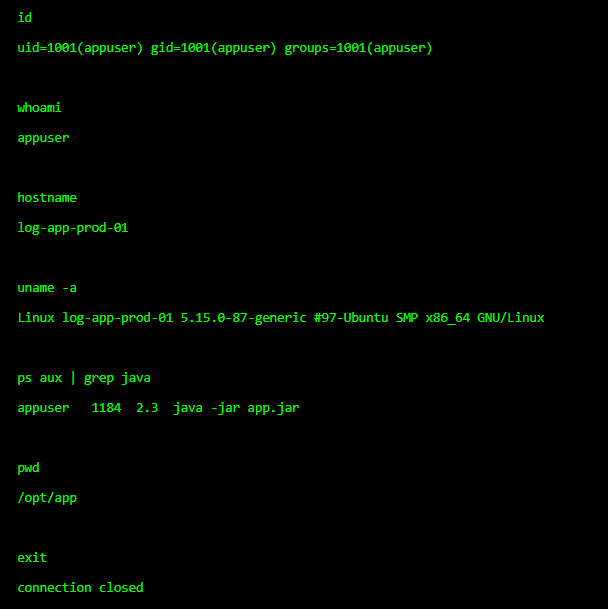
🤖 Cybersecurity - Preventing Log-Based Attacks
This article examines the critical security risks associated with applications that blindly trust and interpret logged user input, as exemplified by the Log4j vulnerability. It highlights how attackers exploit this trust for malicious code execution.
Key Points:
• Logging user-controlled input without sanitization creates security vulnerabilities.
• Log4j demonstrated the potential for remote code execution via log interpretation.
• Attackers can inject malicious payloads into logs for system compromise.
• Strict input validation and output encoding are essential for prevention.
🚀 Implementation:
- Sanitize all user-controlled input before logging to prevent injection.
- Configure logging frameworks to avoid interpreting log entries as code.
- Implement least privilege principles for logging components.
- Regularly audit logs for suspicious patterns and attempted injections.
🔗 Resources:
• Officialwhyte22 ↗ - Source for security insights

Image
Image

Image
🤖 Digital Forensics - Analyzing Visual Evidence
This article addresses the challenges and techniques involved in analyzing visual media for digital forensic purposes, specifically focusing on identifying subtle visual cues that may indicate authenticity or manipulation.
Key Points:
• Visual evidence analysis requires meticulous attention to detail.
• Identifying anomalies can reveal crucial information in investigations.
• Subtle indicators like muzzle flash can confirm event authenticity.
• Forensic tools aid in examining frames for hidden or altered details.
🔗 Resources:
• HackingButLegal ↗ - Profile related to ethical hacking and legal aspects
• Hugh_Jeffincok ↗ - Related professional profile
• stealthygeek ↗ - Related professional profile
✨ AI Security - Autonomous Vulnerability Testing with Strix
This article introduces Strix, an autonomous AI agent designed for advanced security testing. Strix emulates real hacker behavior to dynamically identify and validate vulnerabilities with proof-of-concepts, streamlining security workflows for development and security teams.
Key Points:
• Strix automates vulnerability detection using AI-driven hacking techniques.
• Dynamic code execution identifies runtime security flaws.
• Proof-of-concept generation validates discovered vulnerabilities.
• Reduces manual security testing overhead for development teams.
• Enhances overall application security posture efficiently.
🔗 Resources:
• TheMsterDoctor1 ↗ - Source profile for Strix information

Image
🤖 OSINT - Graph-Based Investigations with Flowsint
This article explores the application of Open Source Intelligence (OSINT) methodologies, specifically highlighting Flowsint as a tool for conducting graph-based investigations. It details how Flowsint uncovers hidden relationships between disparate data points such as domains, IP addresses, emails, and individuals.
Key Points:
• OSINT leverages publicly available information for intelligence gathering.
• Flowsint visualizes complex connections through graph analysis.
• Identifies obscured links between digital assets and entities.
• Supports investigations by revealing patterns in disparate data.
🔗 Resources:
• Hackers-Arise Article ↗ - Article on Flowsint for OSINT
• Dragonkin37 ↗ - Related profile
• _aircorridor ↗ - Related profile
• three_cube ↗ - Related profile

Image
💡 Content Strategy - Accessible Technical Articles
This article outlines an upcoming content strategy focusing on publishing free, accessible technical articles. It emphasizes features designed to enhance readability and privacy, including Tor compatibility and a JavaScript-free experience.
Key Points:
• New articles will adopt an easy-to-read, clean format.
• Content designed to be accessible via Tor for enhanced privacy.
• Absence of JavaScript improves security and loading times.
• Expands reach to a broader audience seeking free technical insights.
🔗 Resources:
• DarkWebInformer Profile ↗ - Profile of the content publisher
• Sample Articles Link ↗ - Link to view sample articles
🤖 AI Impact - Business Model Adaptation and Recovery
This article examines the significant impact of AI technologies on existing business models, as illustrated by a company's experience with revenue loss and subsequent layoffs. It also highlights the potential for rapid recovery and adaptation through strategic partnerships and market support.
Key Points:
• AI advancements can rapidly disrupt established revenue streams.
• Organizations must adapt business models to mitigate AI-driven changes.
• Layoffs may occur as companies restructure due to technological shifts.
• Strategic partnerships can provide crucial support for recovery and growth.
🔗 Resources:
• kmcquade3 ↗ - Related professional profile
• amritwt ↗ - Related professional profile

Image

Image

Image

Image
⭐️ Support
If you liked reading this report, please star ⭐️ this repository and follow me on Github ↗, 𝕏 (previously known as Twitter) ↗ to help others discover these resources and regular updates.
