
🚀 Robotics - Disturbance Rejection in Robotics
Disturbance rejection is a critical aspect of robotics, as it directly affects the performance and stability of robotic systems. In a real-world robotics problem, the performance is likely never dominated by numeric. However, what if the arm starts moving? You can crank up the gain, or argue for inverse dynamics. But what if you have friction, inertia mismatch, state-full friction, and sensor noise? Disturbance rejection becomes even more challenging.
Key Points:
Disturbance Rejection Mechanisms: Different models and reasoning efforts come with different performance/speed/cost tradeoffs. For example, out of the models tested on OSWorld-Verified, we see that the time-performance pareto frontier is dominated by a mix of different model families and reasoning efforts.
Friction and Inertia Mismatch: Friction and inertia mismatch can significantly impact the performance of a robotic system. Understanding and mitigating these effects is crucial for achieving stable and accurate motion.
Sensor Noise and State-ful Friction: Sensor noise and state-ful friction can further complicate the disturbance rejection problem. Developing robust algorithms and models that can handle these challenges is essential for real-world robotics applications.
🔗 Resources:
- Original source ↗
- Original source
- OSWorld-Verified ↗
- Disturbance Rejection in Robotics ↗

Image
🤖 AI - cua-speedrun: A Benchmark for Accuracy, Speed, and Cost
Computer-use agents are extremely good! But they need to improve on a metric which most benchmarks don't track. How much time do CUAs take to complete a task? Introducing cua-speedrun: a benchmark for accuracy, speed, and cost under matched infra.
Key Points:
cua-speedrun Benchmark: cua-speedrun is a project done at @scsatcmu with an amazing team, co-led with @PranjalAggarw16 and @JangLawrenceK , with @wellecks , @dan_fried , @rsalakhu . We’re very excited to see the community push the speed frontier of CUAs.
Accuracy, Speed, and Cost: The cua-speedrun benchmark tracks accuracy, speed, and cost under matched infra. This provides a comprehensive evaluation of CUAs and helps identify areas for improvement.
Community Engagement: The cua-speedrun project encourages community engagement and collaboration. By pushing the speed frontier of CUAs, we can develop more efficient and effective computer-use agents.
🔗 Resources:
- Original source ↗
- Original source
- cua-speedrun ↗

Image
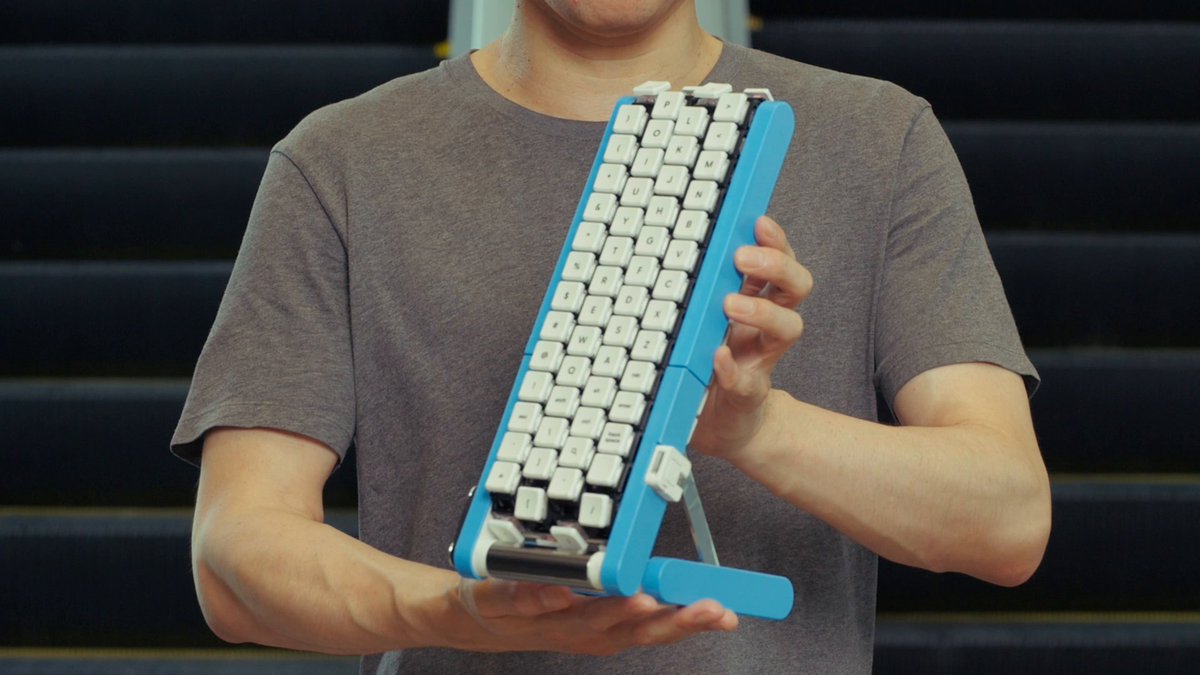
🚀 Robotics - Autonomous Robot for Cheeseburger Delivery
A 2-ton car for a cheeseburger delivery never made sense to us. So we built something that does: an autonomous robot that makes short-distance delivery cheaper, cleaner and simpler. And connectivity is a big part of how it works, becuase we've got more than 3,000 robots.
Key Points:
Autonomous Robot Design: The autonomous robot is designed for short-distance delivery, making it cheaper, cleaner, and simpler. This design enables efficient and effective delivery of cheeseburgers.
Connectivity and Scalability: The robot's connectivity and scalability enable it to work with a large number of robots, making it a viable solution for widespread delivery.
Cheaper, Cleaner, and Simpler: The autonomous robot offers a more efficient and environmentally friendly alternative to traditional delivery methods.
🔗 Resources:
- Original source ↗
- Original source
- Autonomous Robot ↗
Image
🤖 AI - Project Continuum: Real-time Video Interfaces
Introducing Project Continuum by @runwayml_labs , a new operating system research application built around real-time video interfaces. Today, we're sharing an early look at four new ways of interacting with your computer: Portals, Visual Thinking, Responsive Video Interfaces and more.
Key Points:
Project Continuum Overview: Project Continuum is a new operating system research application built around real-time video interfaces. This project aims to revolutionize the way we interact with computers.
Real-time Video Interfaces: The project focuses on real-time video interfaces, enabling new and innovative ways of interacting with computers.
Early Look at Four New Ways: The project provides an early look at four new ways of interacting with computers, including Portals, Visual Thinking, Responsive Video Interfaces, and more.
🔗 Resources:
- Original source ↗
- Original source
- Project Continuum ↗

Image
🚀 Robotics - Solar-Powered Desalination Device
If you drop #coffee on a surface, the water will evaporate, leaving behind a ring containing concentrated coffee particles. With the same principle, this #solar-powered desalination device removes salts from ocean water and leaves behind valuable minerals.
Key Points:
Solar-Powered Desalination: The solar-powered desalination device uses the same principle as coffee rings to remove salts from ocean water and leave behind valuable minerals.
Concentrated Coffee Particles: The device leaves behind a ring containing concentrated coffee particles, demonstrating the effectiveness of the desalination process.
Valuable Minerals: The device removes salts from ocean water, leaving behind valuable minerals that can be used for various purposes.
🔗 Resources:
- Original source ↗
- Original source
- Solar-Powered Desalination ↗
Image
🤖 AI - basal-1.5: Dynamic Classifier Model
basal-1.5 in progress. I've gathered a ton of feedback, reflections, and even data. The upcoming evenings are shaping up to be spent on building an even better dynamic classifier model. Roadmap planned all the way to version 2.5 (no joke at all). On the basal_si5_pl page,
Key Points:
basal-1.5 Overview: basal-1.5 is a dynamic classifier model that is currently in progress. The model aims to improve upon previous versions and achieve better performance.
Feedback and Reflections: The development of basal-1.5 involves gathering feedback, reflections, and data to improve the model's performance.
Roadmap to Version 2.5: The roadmap for basal-1.5 includes plans to reach version 2.5, demonstrating the model's potential for growth and improvement.
🔗 Resources:
- Original source ↗
- Original source
- basal-1.5 ↗

Image
🚀 Robotics - Gboard Swirl Version
To all users Here's a new proposal from the Gboard team. A keyboard where keys flow right to your fingertips We've developed "Gboard Swirl Version." Check out the full version in the reply below↓
Key Points:
Gboard Swirl Version: The Gboard Swirl Version is a new proposal from the Gboard team that aims to create a keyboard where keys flow right to your fingertips.
Keyboard Design: The keyboard design is a key aspect of the Gboard Swirl Version, enabling users to interact with their devices in a more intuitive and efficient way.
Full Version Available: The full version of the Gboard Swirl Version is available for users to check out and experience the new keyboard design.
🔗 Resources:
- Original source ↗
- Original source
- Gboard Swirl Version ↗
Image
🤖 AI - Science + Industry Showcase at #FiO26
Did you visit the Science + Industry Showcase at #FiO26? Exhibitors demonstrated the latest solutions in photonics, panel discussions covered #AI in optical system design and industry experts shared how they moved from academia to industry.
Key Points:
Science + Industry Showcase: The Science + Industry Showcase at #FiO26 provided a platform for exhibitors to demonstrate the latest solutions in photonics.
AI in Optical System Design: Panel discussions covered AI in optical system design, highlighting the potential applications and benefits of AI in this field.
Industry Experts: Industry experts shared their experiences and insights on how they moved from academia to industry, providing valuable advice and guidance.
🔗 Resources:
- Original source ↗
- Original source
- Science + Industry Showcase ↗

Image
