Autoregressive View Model (AVM) streams 2D views from a virtual camera using synchronized feeds and autoregressive generation. The demo shows cameras stopping recording before the virtual camera is chosen, and AVM can generate short blocks with a few denoising steps per block.
Key points
AVM generates short blocks autoregressively, allowing each block to follow a new camera query.
Reality View runs a ~1B-parameter diffusion model on half of one TRIP accelerator on Tesla’s AI4 chip.
Sources
- Original post
- autoregressive-view-model.github.io - Linked in the post
Shirudo runtime launches dynamic eBPF shields
Shirudo runtime launches dynamic eBPF shields to defend Linux systems without downtime. It is open source, built by Cisco with OpenAI, and aims to let AI agents write and deploy shields while services run.
Key points
Open-source Linux runtime allowing agents to write dynamic eBPF controls.
Built by Cisco together with OpenAI.
Sources
- Original post
- openai.com - Linked in the post

Gemini 4 Neon adds native video and audio function calling
Gemini 4 Neon now reads video and audio chunks directly from tools or subagents. The Gemini API now returns document, audio, and video function results. Function calling supports all native modalities.
Key points
Gemini 4 Neon can natively read video chunks from tools or subagents.
Gemini 4 Neon can natively read audio chunks from tools or subagents.
Sources
- Original post
- Function calling with the Gemini API - Linked page
Internal evals checklist 2027 - 88% pass claim
Internal evals checklist 2027 claims agents pass 88% of internal evals. It says eval quality depends on task realism, grader agreement with humans, and metagraders.
Key points
Agent passes 88% of internal evals, but grader is a person's answer key and an LLM judge never calibrated against human judgement.
Checklist includes handling task realism, grader agreement with humans, and metagraders.
Sources


Scaling Laws for Multimodal Data Mixtures - 268 MoE runs 457M–8.3B params
Scaling Laws for Multimodal Data Mixtures is a NeurIPS 2026 Spotlight presenting a scaling law fitted to 268 MoE pretraining runs. The runs cover models from 457M to 8.3B parameters.
Key points
268 MoE pretraining runs were used to fit one scaling law.
Model sizes in the runs ranged from 457M to 8.3B parameters.
Sources

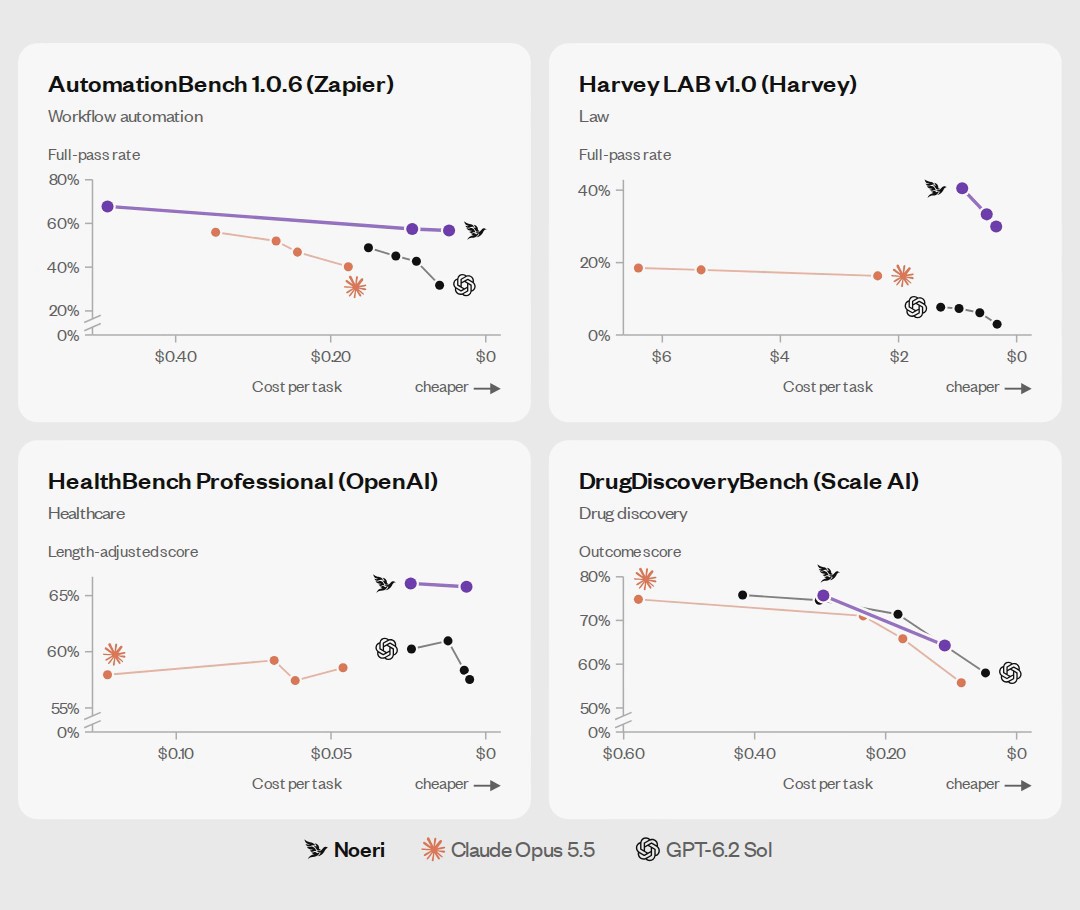
Noeri self-improvement loop beats closed AI models
Noeri’s self-improvement loop claims to solve problems better than the most widely used closed AI models. It aims to improve the entire AI stack: data, harness, models.
Key points
Claim: specialized AIs beating the best closed models.
Feature: loop improves data, harness, and models.
Sources
D2D Detector-to-Differentiable Critic paper announced
D2D Detector-to-Differentiable Critic is a new method to improve numeracy in text-to-image generation, presented in a NeurIPS 2026 paper. The authors share a poster that will appear in Paris next month.
Key points
Paper title: “D2D: Detector-to-Differentiable Critic for Improved Numeracy in Text-to-Image Generation”.
Poster will be displayed in Paris next month.
Sources

MICCAI2027 Call for Workshops, Tutorials, Challenges
MICCAI2027 invites proposals for Workshops, Tutorials, and Challenges with a Letter of Intent due Dec 4 2026. Proposal submission deadline is Jan 8 2027.
Key points
LoI deadline: Dec 4 2026
Proposal submission deadline: Jan 8 2027
Sources
- Original post
- conferences.miccai.org - Linked in the post
