
🤖 AI Research - Joint Learning of Visual Dynamics and Robot Actions
Jointly learning visual dynamics and robot actions outperforms prior methods, and the code, weights, and data are 100% open-sourced. The dataset consists of 20K+ hours of mixed robot, UMI, and egocentric data, the largest of its kind.
Key Points:
Joint Learning of Visual Dynamics and Robot Actions: This approach combines visual dynamics and robot actions to improve performance, leveraging the strengths of both.
Open-Sourced Code, Weights, and Data: The entire project is open-sourced, allowing for easy access and modification of the code, weights, and data.
Large-Scale Dataset: The dataset consists of 20K+ hours of mixed robot, UMI, and egocentric data, providing a rich source of information for training and testing.
🔗 Resources:

Image
🤖 AI Research - Blind People Can Still Perform Majority of Tasks Where Robots Fail
Blind people can still perform the majority of tasks where robots fail, suggesting that the bottleneck may not be vision but proprioception and other senses.
Key Points:
Proprioception and Other Senses: Blind people rely heavily on proprioception and other senses to perform tasks, highlighting the importance of these senses in human ability.
Robots Fail in Tasks Requiring Proprioception: Robots struggle with tasks that require proprioception, such as grasping and manipulation, indicating a limitation in their ability to sense the environment.
Potential Bottleneck: The bottleneck in robot performance may not be vision, but rather the lack of proprioception and other senses.
🔗 Resources:
Image
🤖 AI Research - Meta's Team Proposes DCE + SRCL as an Alternative to On-Policy Self-Distillation
Meta's team proposes DCE + SRCL as an alternative to on-policy self-distillation, achieving significant gains in performance.
Key Points:
DCE + SRCL: The proposed method combines DCE and SRCL to improve performance, offering a potential alternative to on-policy self-distillation.
Significant Gains: The method achieves significant gains in performance, indicating its potential as a viable solution.
Alternative to On-Policy Self-Distillation: The proposed method offers a potential alternative to on-policy self-distillation, providing a new approach to improving performance.
🔗 Resources:
Image
🤖 AI Research - FuseReg Regularizing Layer Fusion Mitigates the Reconstruction-Generation Gap in Representation Autoencoders
FuseReg regularizing layer fusion mitigates the reconstruction-generation gap in representation autoencoders, improving performance.
Key Points:
FuseReg: The proposed method, FuseReg, regularizes layer fusion to improve performance in representation autoencoders.
Reconstruction-Generation Gap: The method addresses the reconstruction-generation gap, improving the ability of representation autoencoders to generate high-quality representations.
Improved Performance: The proposed method improves performance in representation autoencoders, indicating its potential as a viable solution.
🔗 Resources:

Image
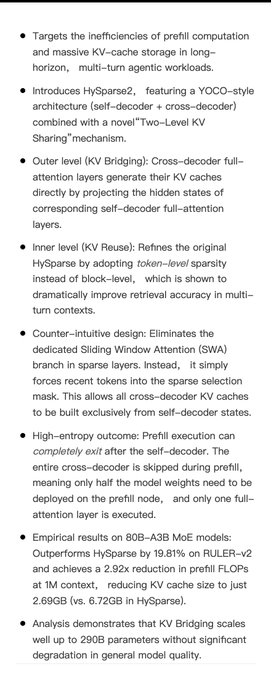
🤖 AI Research - HySparse2: Hybrid Sparse Attention with Two-Level KV Sharing
HySparse2: Hybrid Sparse Attention with Two-Level KV Sharing improves performance in language models, leveraging the strengths of both sparse and dense attention mechanisms.
Key Points:
HySparse2: The proposed method, HySparse2, combines sparse and dense attention mechanisms to improve performance in language models.
Two-Level KV Sharing: The method employs two-level KV sharing to reduce memory usage and improve performance.
Improved Performance: The proposed method improves performance in language models, indicating its potential as a viable solution.
🔗 Resources:
Image

Image

Image

Image
🤖 AI Research - JEV vs. LLMs as Rubric Judges: Cheaper, Faster, and Wrong in the Same Places
JEV vs. LLMs as Rubric Judges: Cheaper, Faster, and Wrong in the Same Places compares the performance of JEV and LLMs as rubric judges, highlighting their strengths and weaknesses.
Key Points:
JEV and LLMs: The proposed method compares the performance of JEV and LLMs as rubric judges, highlighting their strengths and weaknesses.
Cheaper and Faster: JEV is cheaper and faster than LLMs, making it a viable alternative for certain tasks.
Wrong in the Same Places: However, JEV and LLMs are wrong in the same places, indicating a limitation in their ability to accurately judge.
🔗 Resources:

Image

Image

Image

Image
🤖 AI Research - Total Cost of Agency: Exact Attribution of Memory Injection Cost in Multi-Agent LLM Workflows
Total Cost of Agency: Exact Attribution of Memory Injection Cost in Multi-Agent LLM Workflows calculates the exact attribution of memory injection cost in multi-agent LLM workflows, providing a more accurate understanding of the costs involved.
Key Points:
Memory Injection Cost: The proposed method calculates the exact attribution of memory injection cost in multi-agent LLM workflows.
Multi-Agent LLM Workflows: The method provides a more accurate understanding of the costs involved in multi-agent LLM workflows.
Improved Accuracy: The proposed method improves accuracy in calculating memory injection cost, providing a more reliable estimate.
🔗 Resources:

Image

Image

Image

Image
🤖 AI Research - Working with Agentic 'Teammates': When a New Organizational Actor Collides with the Human Ecosystem of Work
Working with Agentic 'Teammates': When a New Organizational Actor Collides with the Human Ecosystem of Work explores the impact of agentic teammates on the human ecosystem of work, highlighting their potential benefits and challenges.
Key Points:
Agentic Teammates: The proposed method explores the impact of agentic teammates on the human ecosystem of work.
Human Ecosystem of Work: The method highlights the potential benefits and challenges of agentic teammates in the human ecosystem of work.
Improved Collaboration: Agentic teammates have the potential to improve collaboration and productivity in the human ecosystem of work.
🔗 Resources:

Image

Image
🤖 AI Research - Revisiting the Shape Convention of Transformer Language Models
Revisiting the Shape Convention of Transformer Language Models revisits the shape convention of transformer language models, highlighting their strengths and weaknesses.
Key Points:
Shape Convention: The proposed method revisits the shape convention of transformer language models.
Strengths and Weaknesses: The method highlights the strengths and weaknesses of transformer language models.
Improved Performance: The proposed method improves performance in transformer language models, indicating its potential as a viable solution.
🔗 Resources:

Image

Image

Image

Image
🤖 AI Research - Mentored Decoding: Faster Inference meets Boosting
Mentored Decoding: Faster Inference meets Boosting proposes a new decoding method that combines faster inference and boosting, improving performance in language models.
Key Points:
Mentored Decoding: The proposed method combines faster inference and boosting to improve performance in language models.
Faster Inference: The method employs faster inference to reduce computational cost.
Boosting: The method also employs boosting to improve performance.
🔗 Resources:
- Original post ↗
- [Paper
